
OG Summit 2026 recap: AI is rewriting the operator's job. Here's what we learned about leading through it.
For a decade, Operators Guild has been a community for the people who hold companies together — the BizOps leads, COOs, CFOs, chiefs of staff, and "I-just-get-it-done" generalists whose work doesn't fit neatly inside a department. When we started, the most common question in our community was literally: what the f** is BizOps?* Nobody built software for us. We were the people who built around everyone else's software.
At this year's OG Summit, that quiet utility moved to the center of the room. AI is rewriting the operator's job in real time — eating the playbooks that used to define adjacent roles, blurring the lines between functions, and putting cross-functional judgment at a premium. Across two days, eight sessions, and one fairly memorable conversation about amygdalas, a few clear ideas kept surfacing. We've gathered them here.
If you weren't with us in person, this is the version of the recap that won't leave you guessing what you missed.
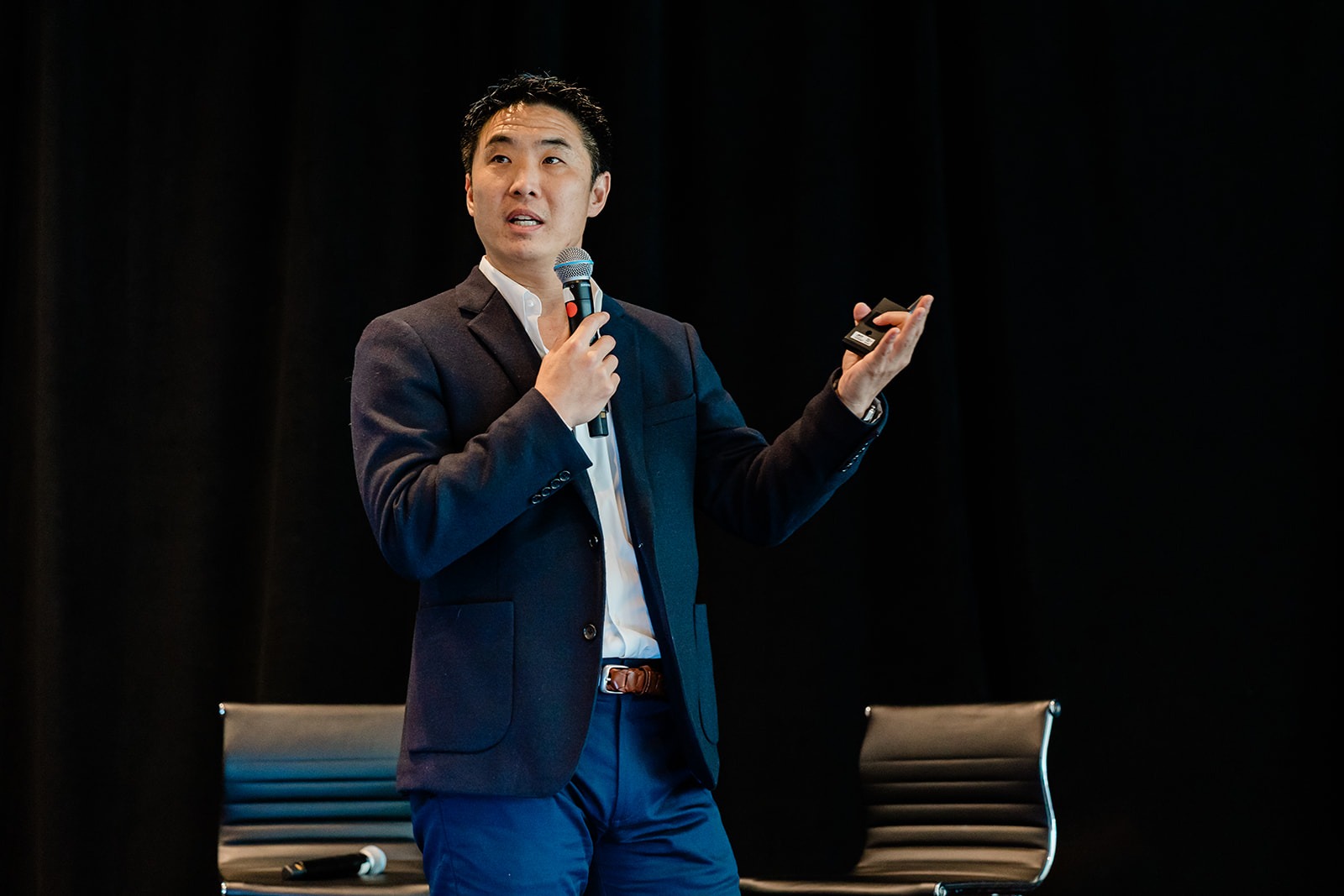
The Operator's moment
Casey Woo, OG's founder, opened with a frame that set the tone for everything after it: business used to be the org chart. Departments. The bigger something gets, the more we specialize. But small is now sophisticated. Five-person companies are top of mind in the venture market. AI eats anything formula-based first. What's left is the messy middle: cross-functional work, judgment, taste.
That's the operator's zone. And for the first time, it's the zone the rest of the org chart is being pulled toward, not away from.
Takeaway: AI commoditizes execution. The premium moves to cross-functional judgment, which has always been operator work. The job hasn't changed; the rest of the company is finally catching up to it.
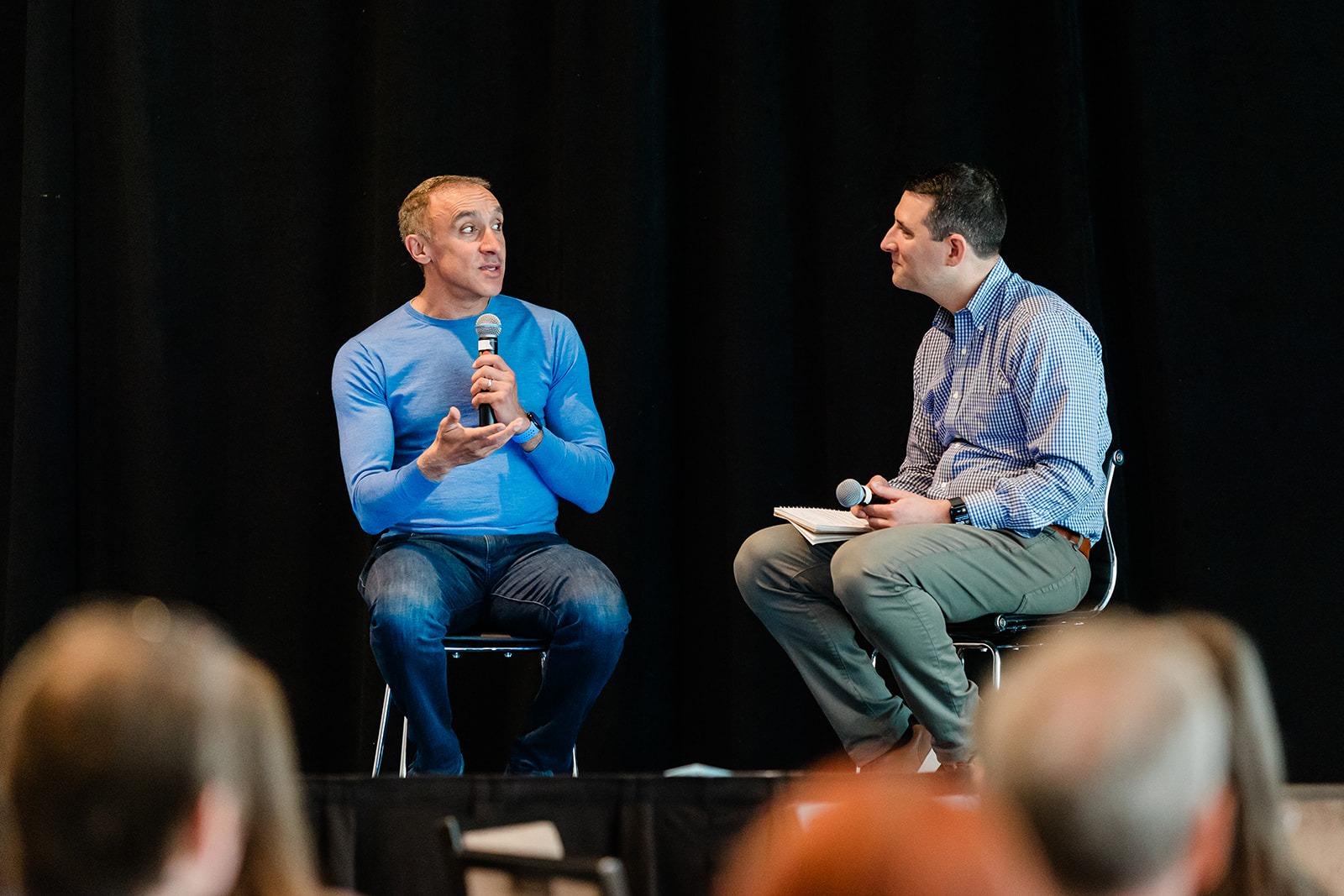
Sam Yagan on identity, moats, and why people are people
Sam Yagan (co-founder of OKCupid, former CEO of Match Group, now at Corazon Capital) joined Elliott Darvick for a fireside that ranged from dating-app economics to managing change as an operator-turned-investor. The thread running through every answer was the same: companies won't fail because they get the technology wrong. They fail because people are people.
A decade ago, Sam said, he'd have pushed founders hard on moat and technical differentiation. Today, those questions feel less urgent than how the team functions, how well people understand each other, and whether the leader has the flexibility to let their identity evolve as the business does. With AI compressing the gap between competent execution and great execution, the things that don't compress — culture, judgment, leadership under pressure — become the actual differentiators.
His advice on managing change is worth quoting almost in full. The two practices he keeps coming back to: be genuinely willing to fail (in his family they actively discuss the week's failures), and stop tying your identity to your title. "If I change who I am — if the thing my job needs from me today is different from what it was yesterday — that's great." The tighter your identity is bound to the status quo, the more resistance you'll feel to the future.
Takeaway 1: The old moats (proprietary tech, defensible workflows) are eroding. The new ones are team chemistry, leadership taste, and how fast you can reskill. Invest there.
Takeaway 2: Career advice for the AI era — don't think one job ahead, think two jobs and five years of skills ahead. Then ask whether what you're doing this quarter compounds toward either one.
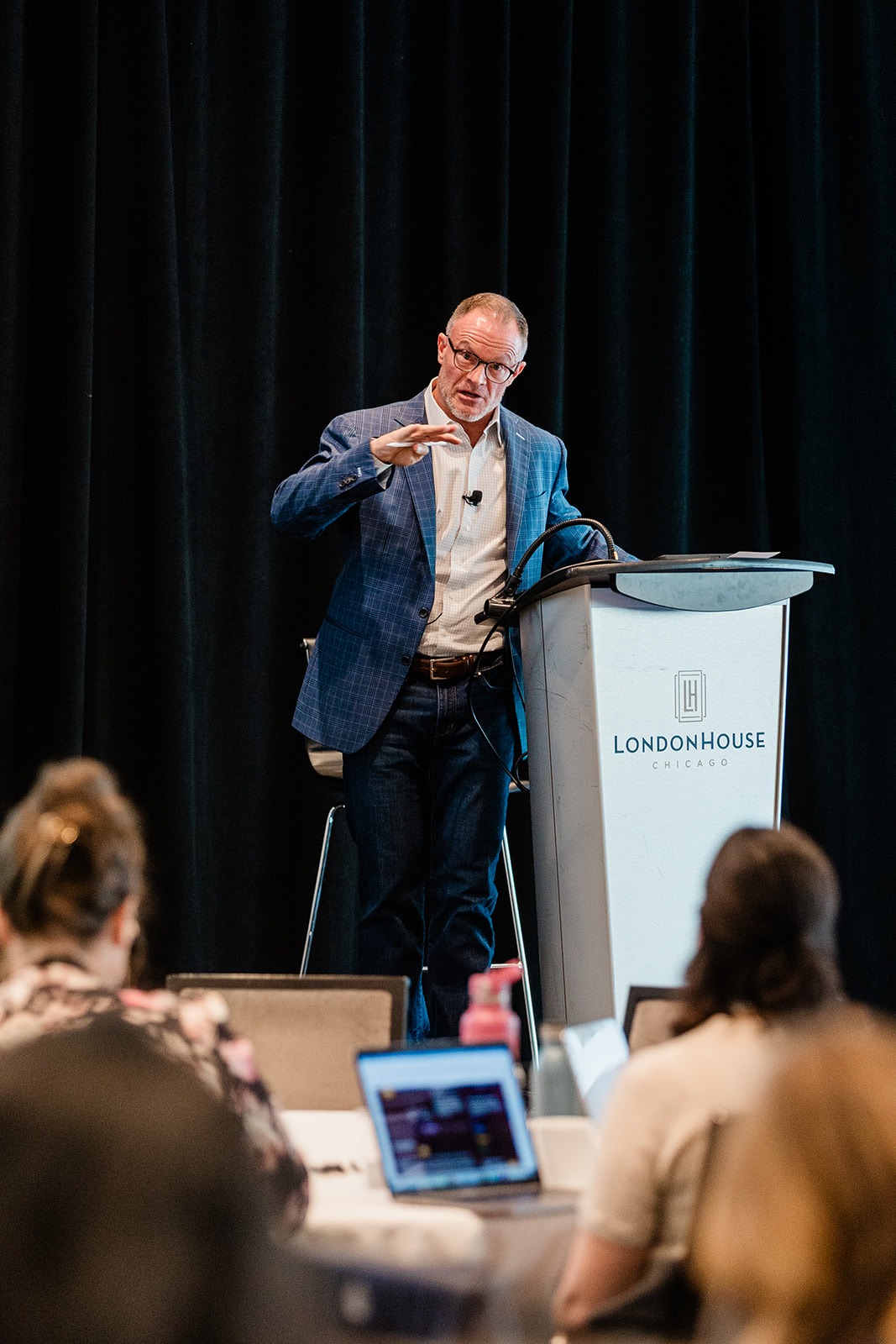
Travis Carson on why you can’t out-think your amygdala (but you can outwork it)
The session that sparked the most hallway conversation was by Travis, who walked us through the neuroscience of behavior under pressure.
The premise: most business failures aren't failures of skill. They're failures of access. Under stress, your amygdala — a 200-million-year-old almond in the middle of your head that has no language and no nuance — interprets a tough meeting the same way it would a tiger. Your prefrontal cortex (where every business skill you've ever built actually lives) gets numbed out by serotonin. Your reptile brain gets a cocktail of dopamine and adrenaline. The result: a lot of business decisions get made by a part of you that thinks it's running from a predator.
The four pressure styles Travis introduced gave the room a shared vocabulary for how teammates actually show up when things get hot. They aren't personality types; they're biological defaults. The point isn't to label people. It's to remove the unconscious part of the reaction so a team can name what's happening, lighten up about it, and move on faster.
Two of his frames are worth taking home:
The Golden Rule is not the answer. Treating people the way you want to be treated only works for about 25% of the room. Use the Platinum Rule instead — treat people the way they want to be treated. Sending an email to a "thinker"? Lead with context. To a "doer"? Action items. To a "talker"? Just call.
The Trust = Competence + Sincerity equation. Everyone needs both. But your style determines which one you reach for first under pressure and it's usually the wrong one for the person across from you. Lead with the opposite of your default for the first 60 seconds of any meeting and trust forms faster.
Takeaway: Build self-awareness about your under-pressure default first; everything else (delegation, hiring, conflict) gets easier.
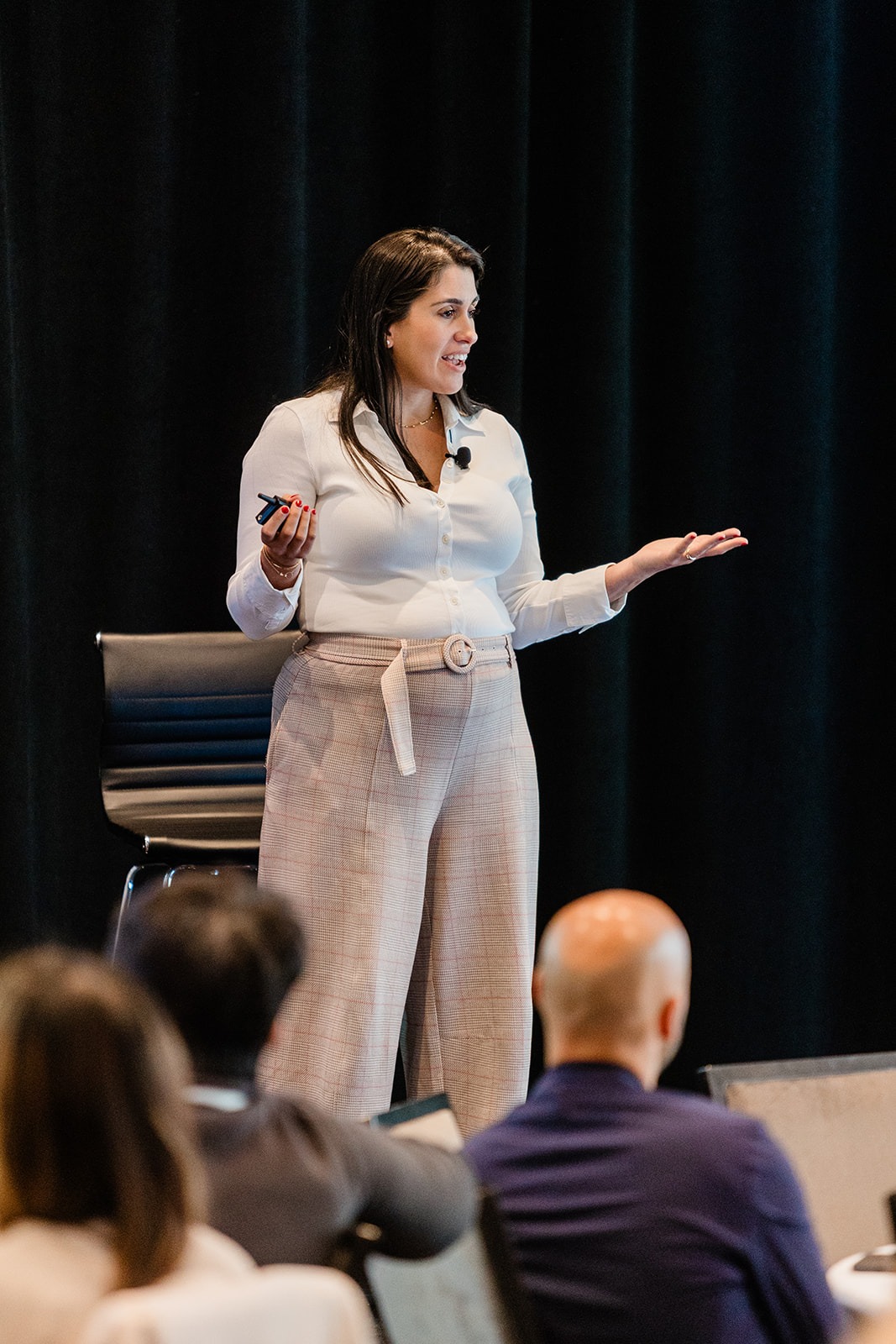
Camila Matias on what it actually took to make Brex AI-native
If there was one talk that crystallized the day's central theme, it was Camila's. She joined Brex as the first finance hire almost eight years ago, became COO in late 2023 during a period she described candidly as a turnaround, and now serves as an advisor. When the CEO asked her, "If you were founding Brex today, how would you build operations?" she realized two things very quickly: the answer wasn't incremental, and she couldn't find it from inside her existing calendar.
So she canceled every meeting and started a hacker house.
Ten engineers. A conference room. Six weeks. The mandate: rebuild onboarding for the long-underserved small-business segment, end-to-end, AI-native. The result: a fully automated process with no human in the loop, better customer experience than the human pilot it replaced, and a side project that now drives 50 million transactions a month for Brex. A second hacker house tackled core application processing and got to 86% automated KYC.
Camila's framing of why this worked is what every operator in the room wrote down. AI transformation isn't a tooling update. It's an operating model redesign. And operating models don't get redesigned in between recurring meetings.
A few of her sharper principles:
- The decision-maker has to be in the room. Not in the steering committee. Not on Slack. In the room. So compliance questions get resolved in real time and momentum doesn't break.
- Physical space matters. "We're changing the physics of how things operate." Co-location for a focused project is not nostalgia — it's a forcing function.
- Pick a controlled, end-to-end problem. Small enough to fail safely. Big enough that people care if it works.
- Aha moments, not training. People don't internalize AI from a curriculum. They internalize it when they solve their own problem with it.
Takeaway 1: If AI is sitting on top of your existing org chart and ways of working, you don't have an AI strategy. You have AI subscriptions. The real work is operating-model redesign.
Takeaway 2: You cannot transform a company from inside its standing meeting cadence. Carve out the time, the space, and the decision-making authority — or accept that nothing fundamental will change.
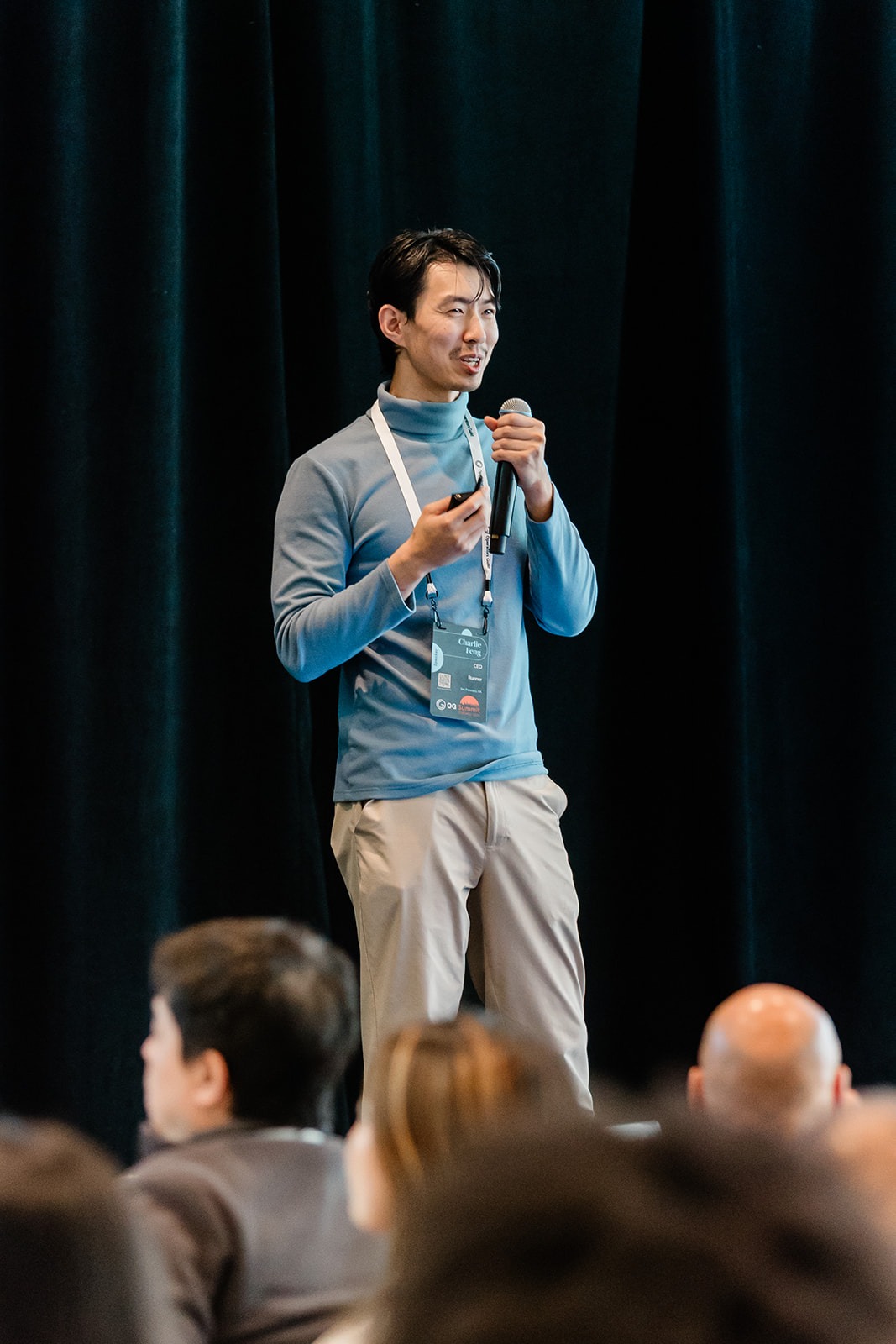
Charlie Feng on how to integrate AI into your workflow the right way
Charlie, who co-founded ClearBank and now runs Runner, took the room through the practical question every operator is currently quietly Googling: do I build it myself, or do I buy something? His answer is a useful inversion of how most people are thinking about it.
The hype frames agents as digital employees that will figure things out on their own. The reality is closer to onboarding a very smart, very fast, very new hire who has no context for your company, your preferences, or your prior decisions. The skill.md files agents run on aren't magic — they're essentially Notion SOPs by another name. You write them. You revise them. You give feedback. You do memory cleanups. And in exchange, the agent compounds.
A few of his practical lessons:
- Mono-folder, not micro-services. Resist the urge to spread agent context across dozens of repos. One big, well-organized folder gives the agent the same cross-context that makes a human operator valuable in the first place.
- Regular jobs are the unlock. The shift from "I'll ask Claude when I think of it" to "Claude runs my morning briefing every weekday at 6 am" is the moment most operators actually feel the leverage.
- Treat memory files as IP. Your accumulated context, like preferences, decisions, and history, is yours, not your vendor's. Make sure you can export it.
Takeaway 1: The productivity gap between operators who use AI well and those who use it casually will be enormous. The differentiator is whether you've actually written down what you want it to do.
Takeaway 2: Stop thinking "should I write a script?" Start thinking, "Should this agent run on a schedule?" That mindset shift changes what gets automated.
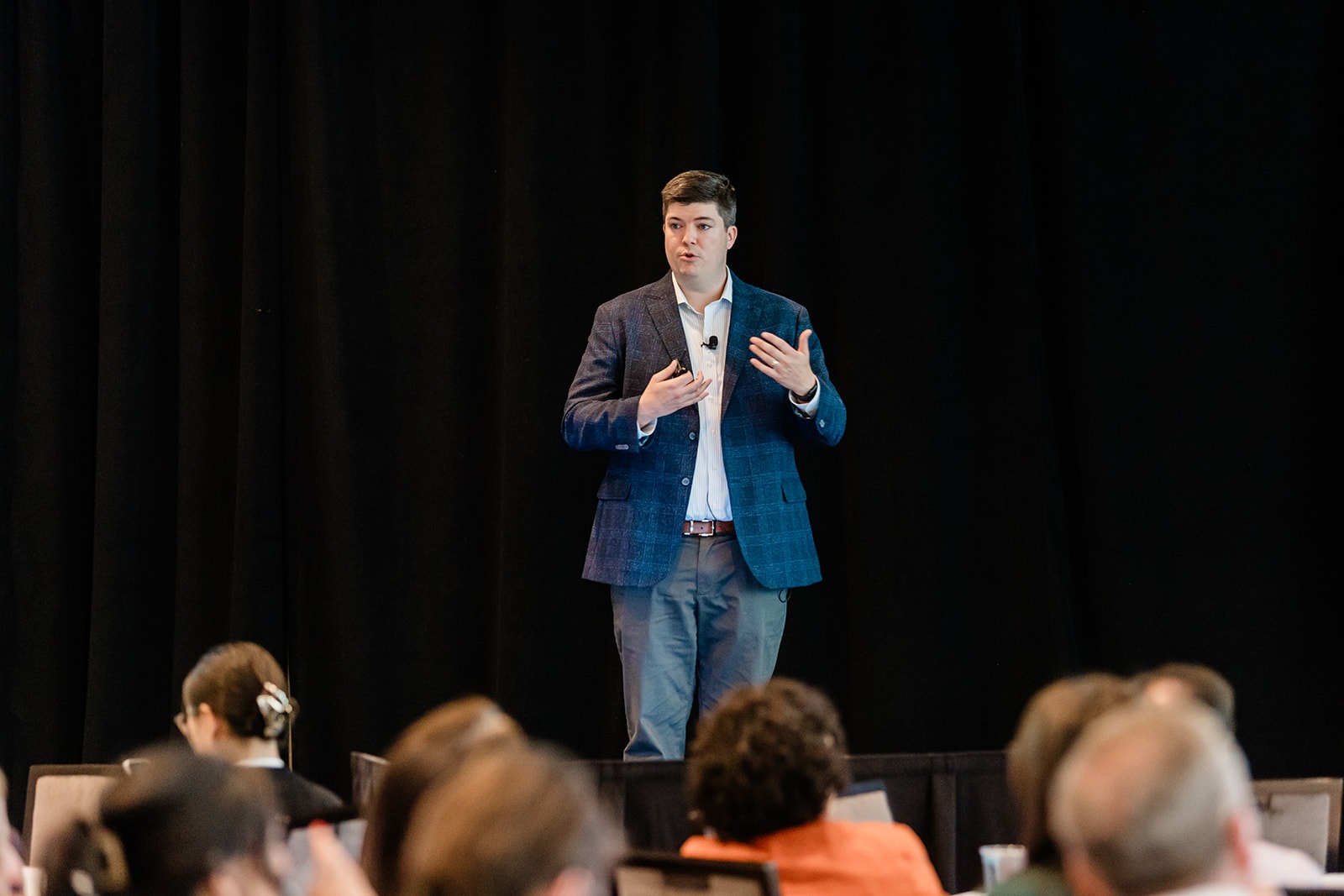
Ryan Milligan on why your comp plan is about to break
Ryan, CRO at Quotapath, walked us through a problem most CFOs and CROs are about to inherit, whether they want to or not. Comp design has historically rested on a quiet assumption: revenue is predictable, and gross margins are stable. Close a deal, retire quota, pay commission. The math works.
That assumption falls apart when your product is AI-embedded and consumption-based. Now usage swings. Margins swing. The deal that closes today might be a 70%-margin customer or a -10%-margin customer depending on how they use the product, and you won't know for ninety days.
His framework for the transition is the cleanest we've heard:
- Shift the commissionable metric from revenue to projected profit. Pay reps on what we expect this customer to actually be worth.
- Separate quota retirement from payment schedule. Calculate at close; release in tranches as invoices clear. Reps still get the dopamine hit; the business doesn't pay for revenue that never materialized.
- Build prediction infrastructure. ICP scoring + propensity-to-adopt + 12-month projected gross profit. Cap the model at 3-4 variables so reps can actually understand why a deal is worth what it's worth.
- Expand seller responsibility. In a land-and-expand world, the AE who walks away on day one is the wrong AE. The persona is shifting toward value-selling and intellectual curiosity — and away from pure hunters who want to spike the football.
A line worth pinning above any CRO's desk: "People are naturally motivated to do what you reward." When comp lags business model change, your sellers start working against the business — usually without knowing it. Get it right early.
Takeaway 1: If your business is moving to usage-based pricing and your comp plan isn't moving with it, you are quietly subsidizing your worst customers and starving your best AEs of upside.
Takeaway 2: "Pay on close" and "pay on cash" are no longer the only options. The interesting design space is between them — projected profit at close, with payment dripped as reality plays out.
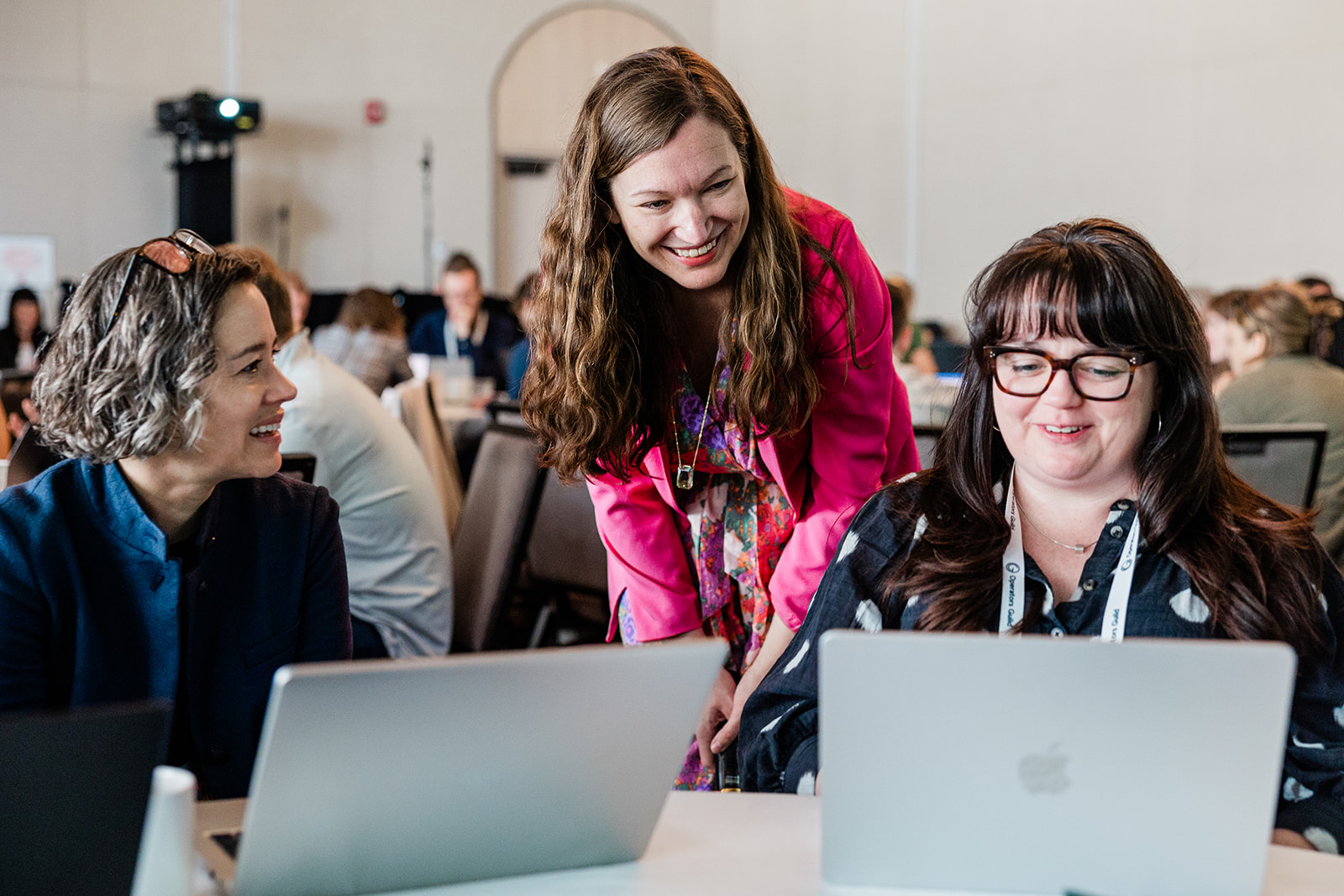
Bethany Crystal on how to build with AI
The most hands-on session of the Summit wasn't a talk — it was a Builder Lab. Bethany Crystal, founder and CEO of Build First, runs an AI learning lab that turns non-technical teams (ages 8-80, she's quick to point out) into confident AI builders. She came to OG to do exactly that for our room.
The frameworks she handed out are worth keeping, even if you weren't in the room:
POP-IT — a primer for builders, developed with Decoded Futures. Before you prompt anything, name your Problem, your desired Output, your Prompt, your Inputs, and how you'll Test that it's working. Most "AI doesn't work for me" complaints collapse the moment someone runs through these five questions honestly.
What is an AI-shaped problem? Five attributes: specific (smallest scoped version), customized (a known audience, even if that audience is you), intentional (you know what good looks like), informed (context and data are baked in), and expressive (you're using AI as a creative thought partner, not a search engine).
Takeaway 1: AI fluency is closer to language fluency than software training. You don't get there by reading the dictionary — you get there by talking, building, failing, and iterating. Start a build today, however small.
Takeaway 2: Your "Business OS" doesn't need to be a cathedral. Start with inputs, outputs, and one interface. Add agents and integrations as you find the seams. The operators who'll compound fastest in the next two years are the ones who own this layer themselves.

The throughlines
Pull on any of these sessions, and you find the same underlying argument. AI isn't a feature you bolt onto a company. It's a forcing function that exposes every place your operating model, your org chart, your comp plan, your meeting cadence, and your leadership reflexes were already brittle.
Three patterns stood out across the day:
Execution is becoming commoditized; judgment isn't. Casey said it. Sam said it. Camila demonstrated it. The work that's hardest to automate — knowing which problem to solve, choosing a controlled scope, deciding when to break process, holding a room together under pressure — is exactly the work operators have always done. The market just didn't have a word for it.
The bottleneck has moved from technology to operating model. Brex's hacker houses worked not because the engineering was novel but because Camila had the authority to cancel her calendar, choose a problem, and put the decision-maker in the room. Most companies have the AI tools. They don't have the operating model to use them.
Leadership reflexes matter more, not less. When you're managing a portfolio of humans and agents, when comp plans no longer self-regulate, when product feedback loops compress from quarters to days — your ability to stay above your biology, to delegate without drift, to make the call without all the data is the work. Travis's session was about pressure. But it was really about everything else.
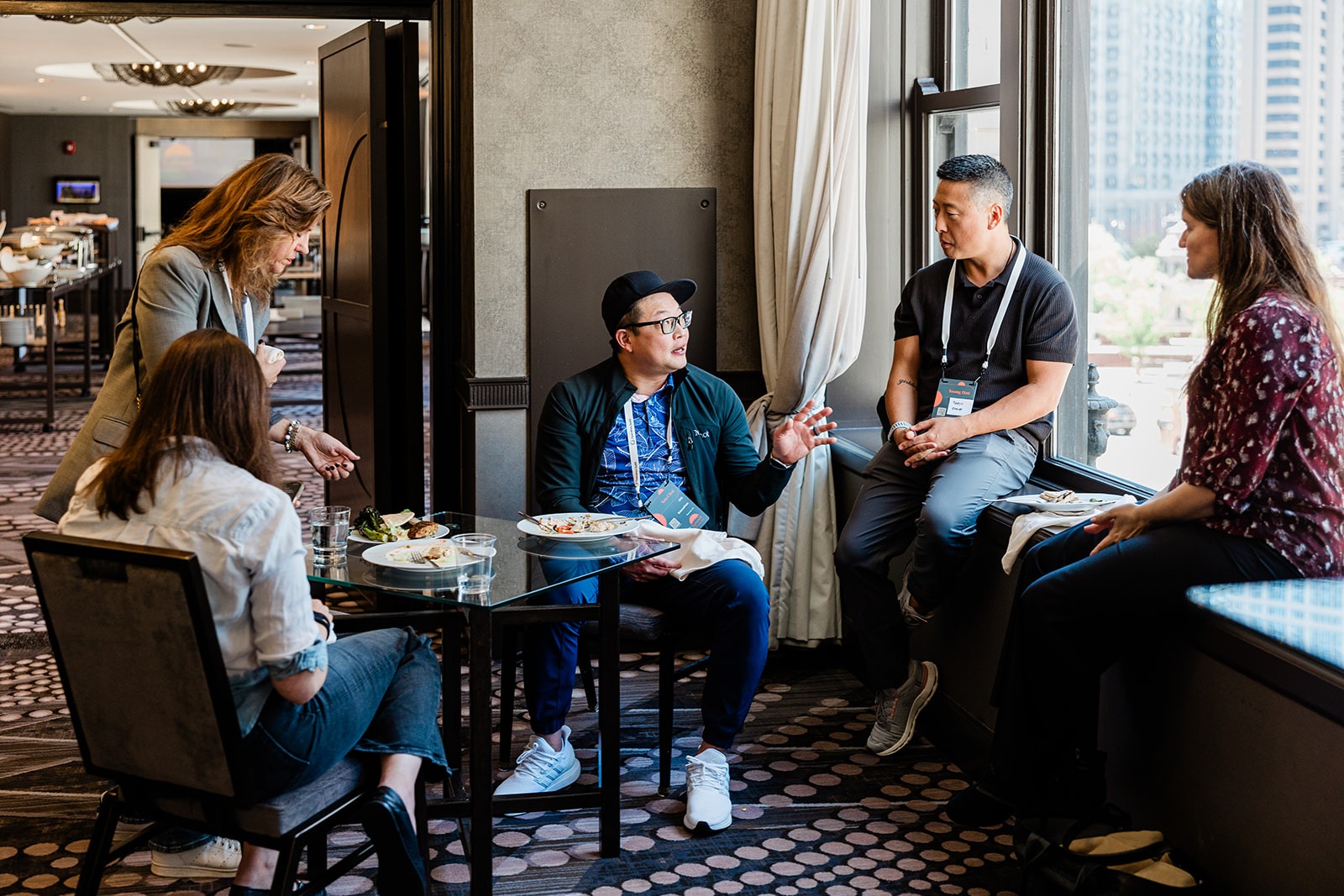
What we took with us
The OG Summit isn't a conference. It's twenty chapters around the world spending a few days in the same room. We call it intimacy at scale, and the longer we run it, the more we believe that the small, curated rooms are where the real work of figuring out the next decade gets done.
A few things we're going to be sitting with for the next quarter:
- The companies that treat AI as an operating model question, not a tooling question, are going to compound far beyond those that don't.
- The operator persona is moving from "the person who gets things done" to "the person who decides what should get done, designs the system around it, and manages the humans-and-agents that execute it."
- The skills that will compound are the ones that don't compress under pressure: judgment, taste, leadership, and the ability to choose the right problem.
If you're an operator and you don't yet have a room like this, now’s the time. Apply to join OG today.
The next decade is going to belong to the people who can sit in ambiguity, redesign the work, and hold the team together while they do it. Which, as it turns out, is what we've been doing all along.
See you at the next Summit.