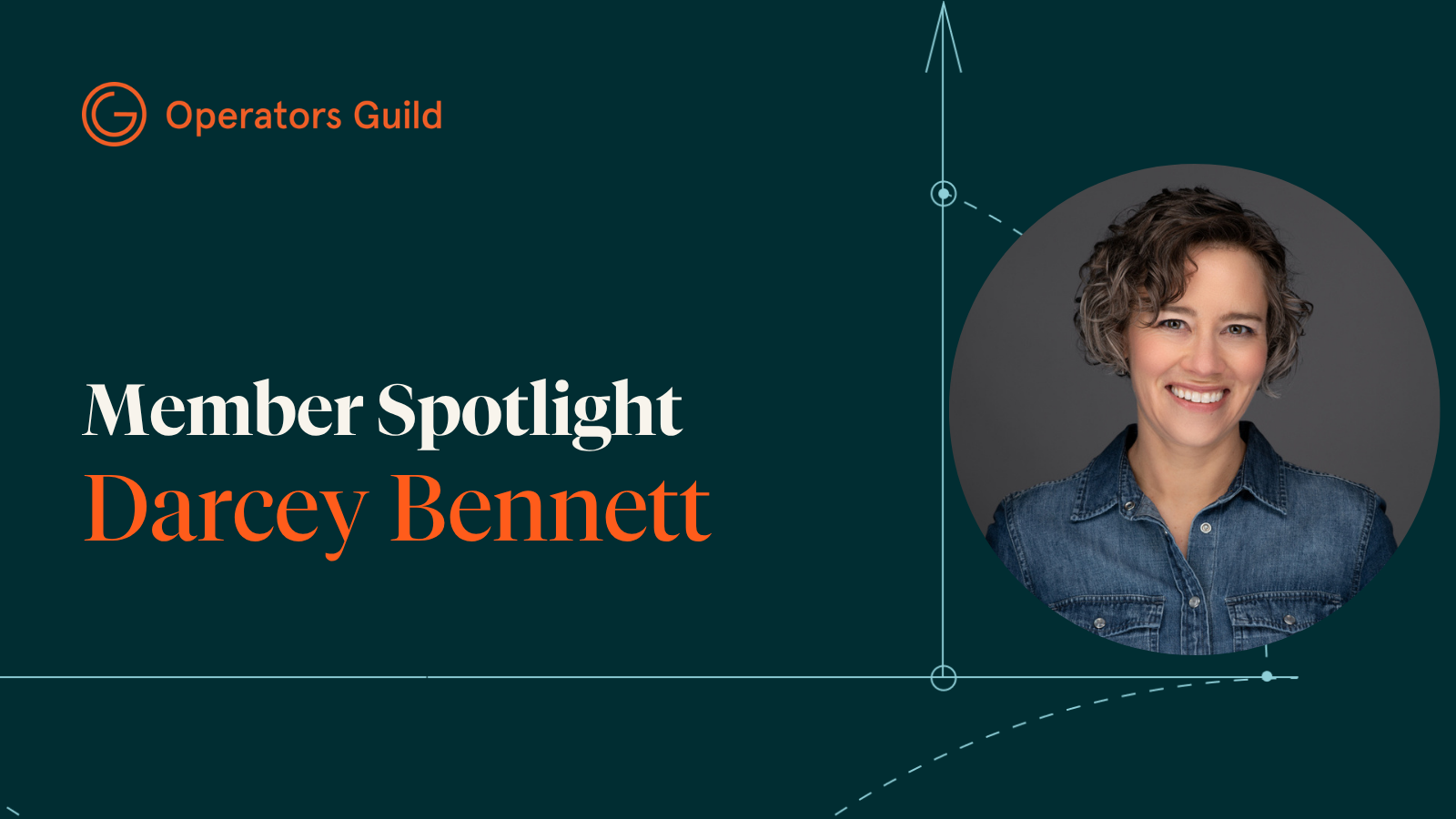
Get to know Darcey Bennet
Darcey Bennett spent 25 years at the Corporate Executive Board (CEB) and Gartner, rising from research analyst to chief of staff for a roughly $500 million membership business, where much of her job was aligning fiercely independent teams around a shared way of working. She's since led strategy and operations at PE-backed software companies and now runs a solo independent consulting practice. She's a member of OG's DC chapter.
Could you start by introducing yourself and your background?
I spent about 25 years at CEB, which eventually became part of Gartner. I started as a researcher, then moved to the corporate strategy team, where I led a number of new product explorations. After that I spent about ten years as chief of staff to a GM who oversaw one business unit and eventually half of CEB, before I moved into a leadership role on Gartner’s internal strategy and operations team.
After CEB and Gartner, I served in senior strategy and operations roles at a couple of PE-backed software companies. Since 2024 I’ve been working as an independent consultant.
What role have mentors and sponsors played in your career?
I’ve been lucky to have some strong sponsors throughout my career. My first manager at CEB practiced case interviews with me over lunch every Friday for six weeks after I didn't get a promotion I wanted. I applied again and got the job. That was my first experience with someone investing real time in my growth.
The other was the leader I served as chief of staff for ten years. I was the most junior person in the room and could easily have stayed the note taker, but he challenged me to earn my seat at the table and speak up when I had a point of view. He pushed me out of my comfort zone, but I always knew he had my back. I say I got my MBA from him without going to business school.
My scope grew a lot when he was promoted to run all of the company's membership programs, and a big part of my job became convincing department leads who'd historically operated independently to work the same way. My boss pushed me to lead them through this change but encouraged me to do it in a way that felt authentic to me. I've never been an aggressive, "take-no-prisoners" type. One of my clients called me the velvet hammer, and I think that fits.
What separates good operators from great ones?
There are a lot of flavors of good operators. I lean into the human element -- getting things done through people rather than despite them.
The less effective operators are the ones who don't acknowledge how much of this work comes down to people. Even with machines doing so much more of our work now, human connection is still really important. Knowing what makes people tick, figuring out what motivates them, and helping people work better together -- that's what's exciting and fun for me.
A lot of this comes from getting thrown into management early. CEB was growing so fast that two years into my first job, I was already managing seven people. I had no right at that age to be responsible for anyone's career, but those early experiences taught me big lessons, including that you can't manage everyone the same way. Different people need to be motivated, given feedback, and worked with differently, and learning that early shaped how I operate today.
Any advice for earlier-career operators?
Touch every one of your projects at least a little bit every day. Move everything forward, even if it's just sending one email or scheduling one meeting. In an operating job, you don't get to deconflict deadlines -- waiting to finish one project before starting the next just doesn't work.
Related to that: know what you control yourself versus what you need from other people, and always start with the other-people stuff first, because how quickly they get back to you is never fully in your control.
I built those two habits early. Now they're part of how I work, and I couldn't survive in high-pressure operating roles without them.
What do you love most about OG?
The people, the spirit of giving, and the level of engagement.
My CEB/Gartner days built my belief in the role-based membership model, and also raised my bar for what "good" looks like. So many businesses have tried and failed to replicate what CEB pulled off, but OG has pleasantly surprised me. The discussion forums impress me most -- every question I've posted has gotten at least one thoughtful, detailed response.
It's also nice to be in a community with "my people." Operator roles can be lonely -- we're often the only ones in the room willing to ask the hardest questions. At OG Summit this year, we did a personality profile exercise, and normally I'm the only one on a team who fits my profile. In that room, for the first time ever, most people shared my profile. That was so gratifying!
What do you like best about the DC chapter?
We're small but mighty. It's a fairly small group that engages deeply and often, so it’s nice to see the same people consistently at events. The DC area is also unique -- you get heavy government influence mixed in with some really interesting businesses.
What would you say to someone considering joining OG?
What you put in is what you get out. The members who get the most value are the ones who take advantage of everything OG offers. For example, I make it a point to join OG Connect matching every month -- what could be better than zero-effort networking? If you invest the time, the return is real.